5 Hand Embroidery Stitches Every Beginner Should Know

There are hundreds of hand embroidery stitches out there, but you don't need to learn them all, especially when you're getting started. A small handful of stitches will carry you through the vast majority of projects — so rather than feeling like you need to master everything at once, start here.
Here are the five I'd recommend every beginner gets comfortable with first.
1. Running Stitch

The simplest stitch of them all, and a great place to begin. It's a straight, evenly spaced in-and-out stitch, often used for outlines, simple lines of decoration, or as the basis for other techniques like Sashiko. It's a lovely, calming stitch to practice while you're getting used to holding your needle and fabric.
2. Back Stitch

A sturdy little stitch that creates a solid, unbroken line — perfect for outlines, lettering, and fine detail work. It's worked by stitching backwards into the end of your previous stitch, which gives it a neat, continuous look. Once you've got the rhythm of it, it becomes second nature.
3. Stem Stitch

A slightly twisted line stitch that's ideal for stems, curved lines, and flowing shapes — hence the name. It gives a lovely rope-like texture and is a step up from back stitch once you're ready to add a bit more texture to your outlines.
4. Chain Stitch

A looped stitch that creates a chain-like line, and one of the most versatile stitches you'll learn. It works beautifully for outlines, filling in shapes, and decorative borders. It looks more intricate than it is — once you've got the loop technique down, it's very repeatable.
5. French Knot
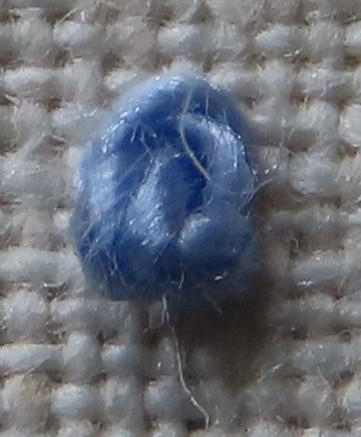
The stitch that intimidates the most beginners, and also one of the most rewarding once it clicks. French knots create small, raised dots — perfect for flower centres, eyes, texture, or scattered detail. It takes a little practice to get the tension right, but it doesn't have to be perfect, it's unique and hand made — a slightly wonky knot still looks lovely.
Why Learn Them on Their Own First
It's tempting to jump straight into a full project, but practicing a stitch on its own — even just a few rows on a spare piece of fabric — means you're not trying to learn a new technique and follow a pattern at the same time. Get comfortable with the stitch first, then bring it into a project with confidence. You'll be glad you spent the time practicing once you've completed your first project.
Ready to Practice?
If you'd like clear, step-by-step guidance on these stitches (and more), my stitch guide patterns are built exactly for this — breaking each stitch down into manageable steps with plenty of photos, so you can learn at your own pace and actually enjoy the process.


Comments